
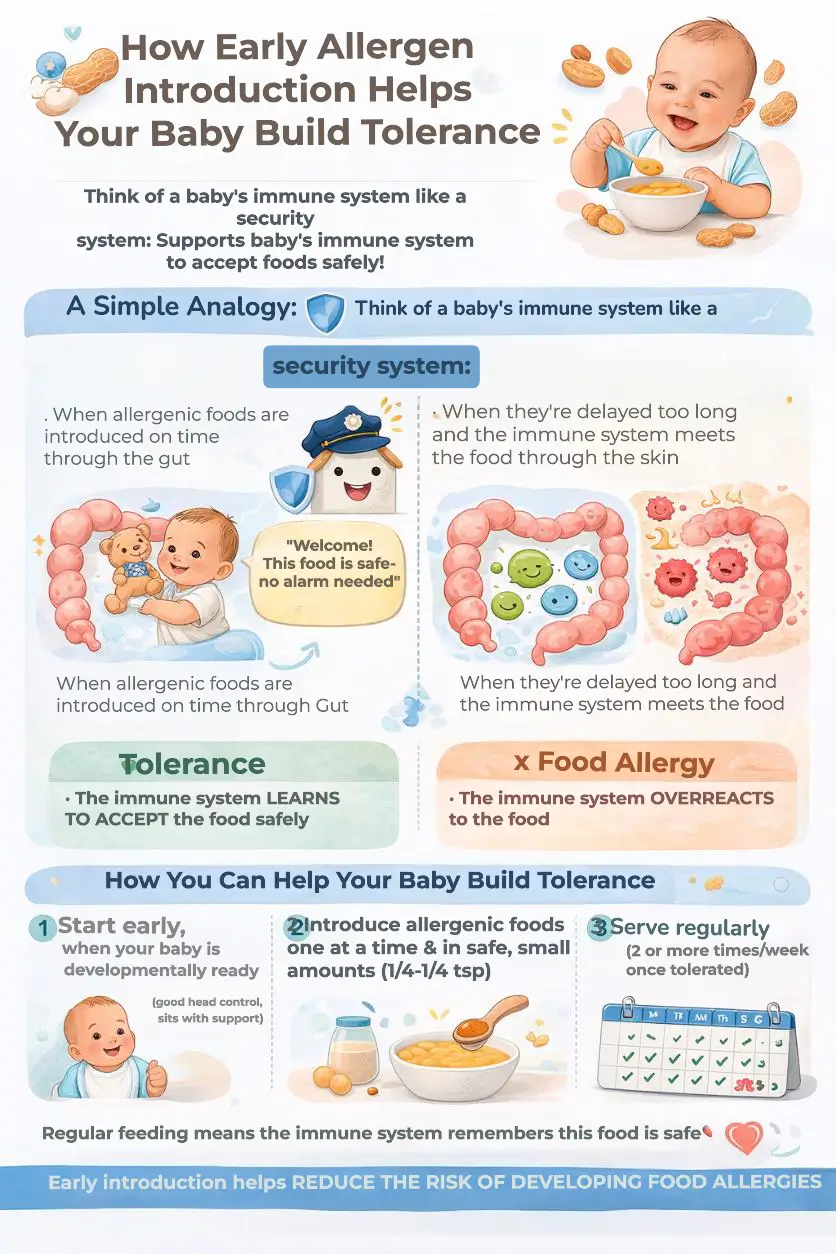
Many parents worry that giving allergenic foods early might cause allergies.
In fact, we now understand the opposite is often true, early exposure can help train your baby’s immature immune system to accept foods safely.
The Immune System: Learning What Is Safe
A baby’s immune system is still developing in the first year of life. It has to learn the difference between:
- Harmful substances (like infections)
- Harmless substances (like food proteins)
If this learning process goes wrong, the body may mistakenly treat a food as dangerous. This is what we call a food allergy.
What Happens with Early Introduction?
When small amounts of allergenic foods are introduced early (around 4 to 6 months), something important happens in the gut:
- The immune system is exposed to the food in a calm, controlled way
- Special immune cells recognise the food as harmless
- The body develops tolerance, meaning it accepts the food without reacting abnormally
This process is often referred to as “immune training” or immunomodulation.
Why the Gut Is So Important
The gut is the largest immune organ in the body.
When food is eaten:
- It interacts with the gut lining
- Signals are sent to the immune system
- The body learns whether to react or tolerate
Early exposure through the gut encourages a “tolerant response,” rather than an allergic one.
What Happens if Foods are Delayed?
If allergenic foods are delayed for too long:
- The immune system may first encounter the food through the skin (especially in babies with eczema)
- This type of exposure is more likely to trigger an allergic response
This is known as the “dual exposure hypothesis” where:
- Early eating = tolerance
- Delayed eating + skin exposure = higher allergy risk
The Role of Repetition
Tolerance is not built in one exposure.
Once a food is introduced and tolerated:
- It should be given regularly (a few times per week)
- This helps the immune system remember that the food is safe
A Helpful Analogy
Think of your baby’s immune system like a security system:
- Early introduction = showing the system a “safe guest list”
- The system learns: “This food is friendly, no alarm needed.”
- Without this early learning, the system may overreact later
What This Means for Parents
By introducing allergenic foods:
- Early (when developmentally ready)
- In small amounts
- And repeating regularly
you are helping your baby’s immune system:
- ✔ Learn safely
- ✔ Build tolerance
- ✔ Reduce the risk of food allergies
The Bottom Line
Early allergen introduction is not about rushing feeding, it’s about guiding the immune system during a critical window of development.
With the right approach, this can play a powerful role in supporting long-term immune health and reducing allergy risk.